
The Best Pan-Seared Stovetop Salmon…& How To Cook Salmon Without Oil
Have you ever wondered how to cook salmon without oil? Honestly, I hadn’t until fairly recently (for reasons mentioned below), but once I went down that rabbit hole I realized that simple pan-seared salmon is the most perfect cooking technique out there!
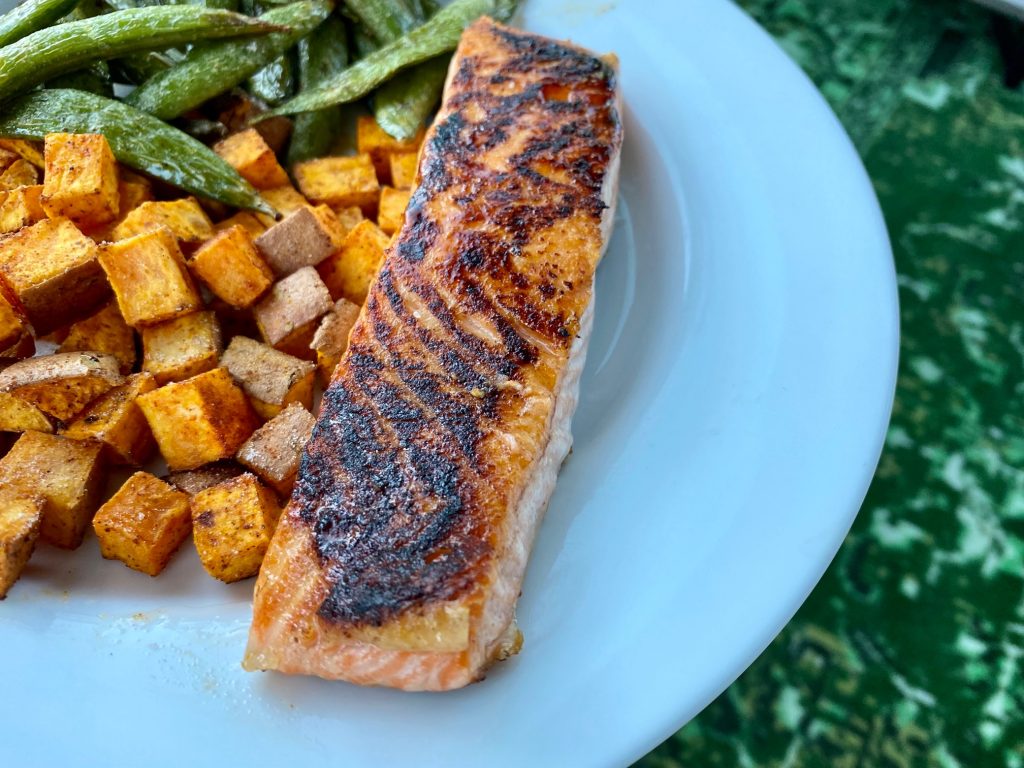
The genesis of this recipe (technique, really) was during the functional medicine/liver detox I did at the beginning of the summer. It includes a fairly restrictive diet of certain proteins (like chickpeas or wild-caught salmon), lots of veggies, and a few healthy fats.
However, cooking with any oil is discouraged due to the oxidation created, so I was looking for ways to cook my favorite (allowed) foods with little or no oil.
Enter: stovetop salmon, which requires no oil (the fish is fatty enough without it) and actually results in the BEST homemade salmon texture!
You can read more about the detox (& gut health protocol) & my tips for staying sane/enjoying!
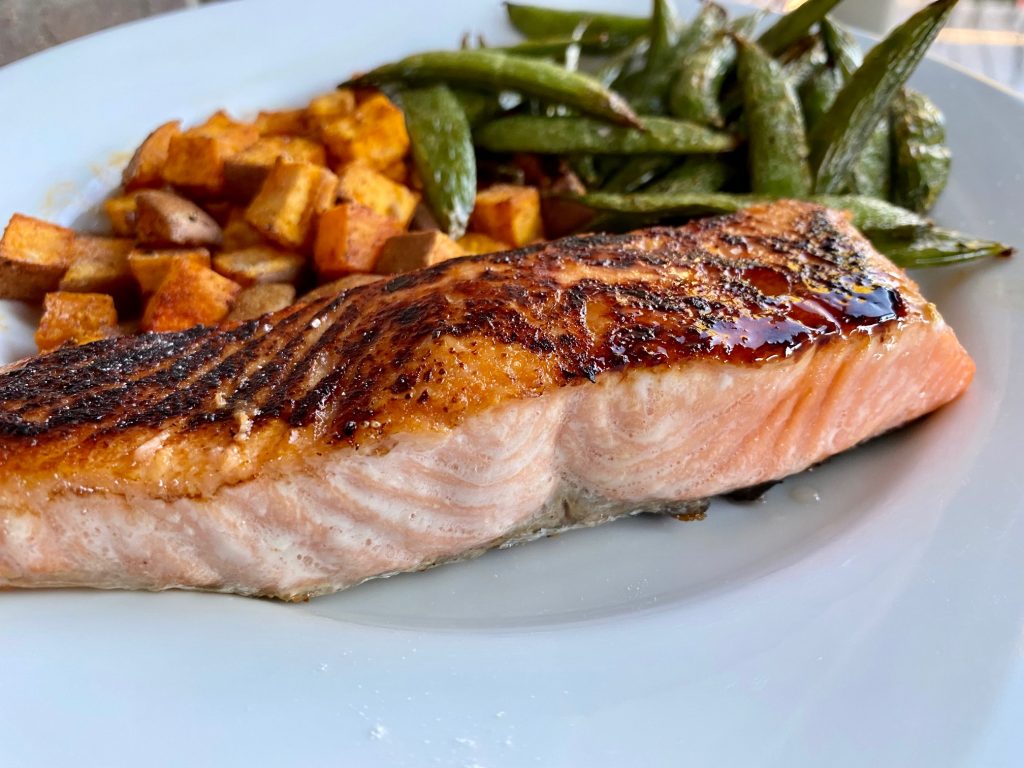
Don’t get me wrong, my pan-caramelized salmon is still a total fave. This pan-seared salmon is a close cousin, just as easy and even a bit healthier.
And the texture is as close to restaurant-grade as I’ve been able to replicate at home. Usually when I grill or bake salmon, it ends up with all that white goo coming out, and a bit soggier than I’d like. It’s definitely edible, but not as delicious as I can get at a good restaurant.
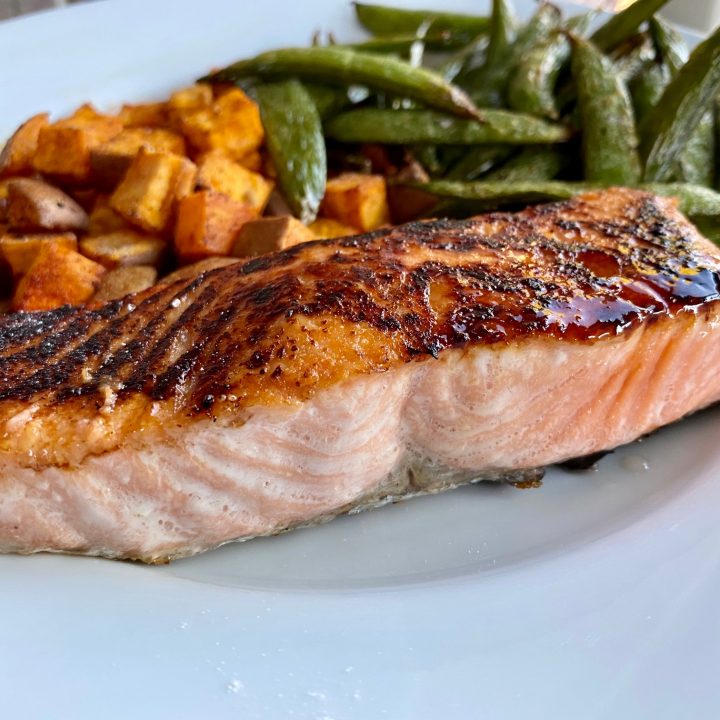
Instead, this stovetop salmon produces a lightly crisp exterior that gives way to perfect moist flaky insides. WE ARE ALL CHEFS!

This would also be a great recipe for surviving a super low-carb diet (see more tips here!)
You’re going to start with a cold non-stick skillet (mine is stainless steel, so it occasionally does stick, but I don’t like the chemicals on the teflon ones). Sprinkle some coarsely-ground sea salt in the skillet where the salmon filet will be.
Pat your salmon dry with paper towels. Place in the pan skin side down (on top of the salt) and sprinkle the top with salt and some fresh-ground pepper. It’s always more salt than you think, you don’t want it to be bland!
You can also add a tiny bit of garlic salt, or paprika, or sometimes I put the tiniest bit of sugar to help it caramelize gorgeously.
Turn on the burner to medium to medium-high and let it start cooking.
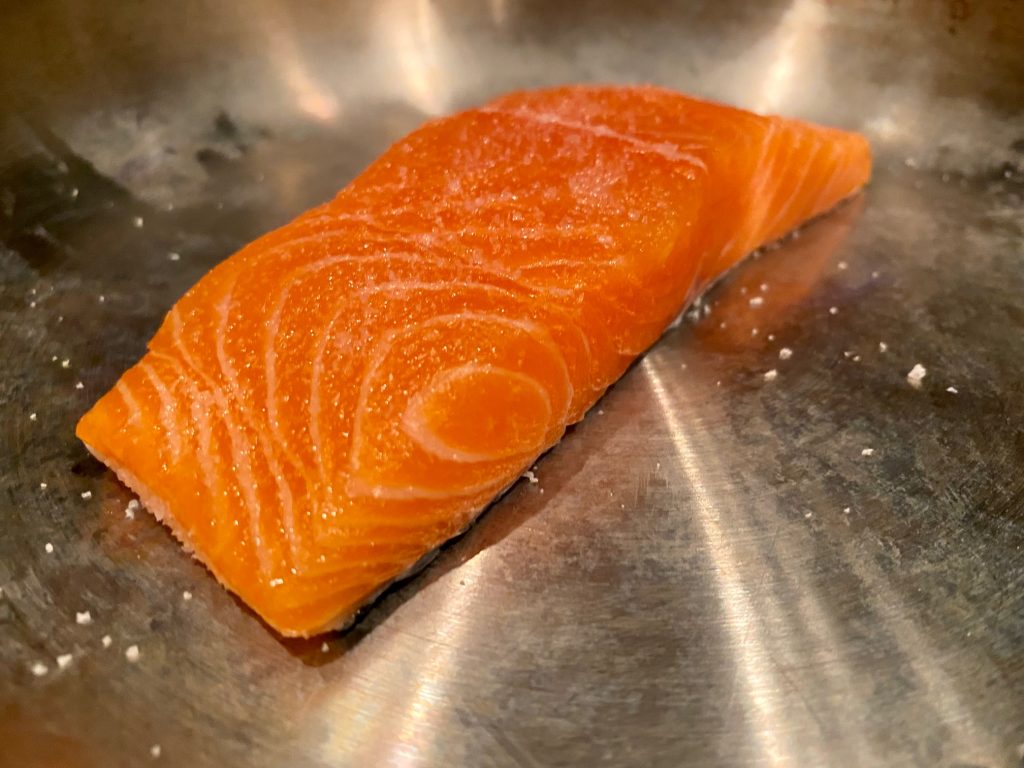

As the salmon cooks, you’ll see the fat beginning to render from the skin and the skin will start to brown, and you’ll start to see a more opaque light pink color moving up from the bottom.
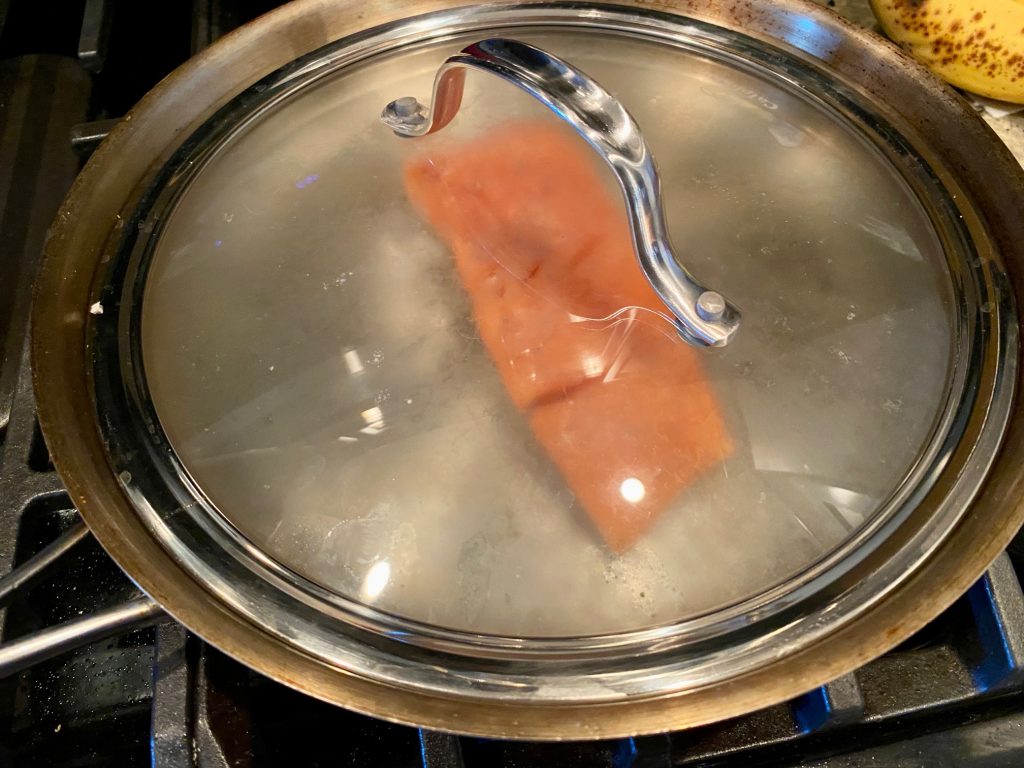
Assuming I have a fairly thick piece, I’ll often put a lid over it toward the beginning of cooking, just for 1-2 minutes. This helps the middle part cook a bit more evenly, without burning the bottom. It’s optional, but I think it helps.
You’ll cook it here with the skin side down for 5-7 minutes probably, but mostly just look at the salmon itself (because thickness matters a lot). See the second pic below? There’s starting to be quite a bit of opaque area, but there’s still quite a bit of darker pink on top.
That means it’s time to flip!

Go ahead and flip your salmon filet, being careful to scrape under the skin to keep it intact as much as possible.
The majority of the actual cooking is going to get done when the skin side is down. Once we flip it, we’ll only keep it here maybe 2 minutes, just to finish it off. You don’t want to overcook it or burn the more delicate flesh that’s on the top of the filet.
The USDA recommends 145 F as the internal temp for salmon, which makes salmon sad and dry. When cooking by other methods, I shoot for 120-125 F, but for my pan-seared salmon I tend to go even lower and just go by by look and feel. I’d guess I usually end up pulling it off around 112 F.
Don’t forget that it keeps cooking a bit once you take it off the heat!

Again, very carefully scrape under the filet and remove it from the pan, flipping it back over and putting it on a plate.
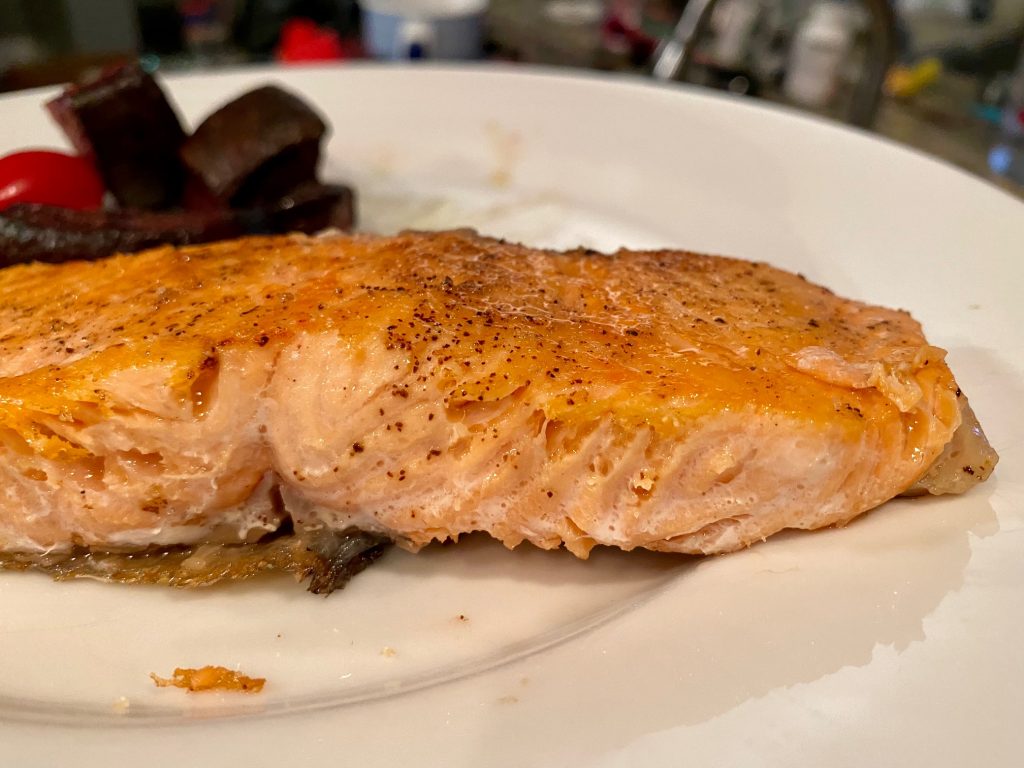
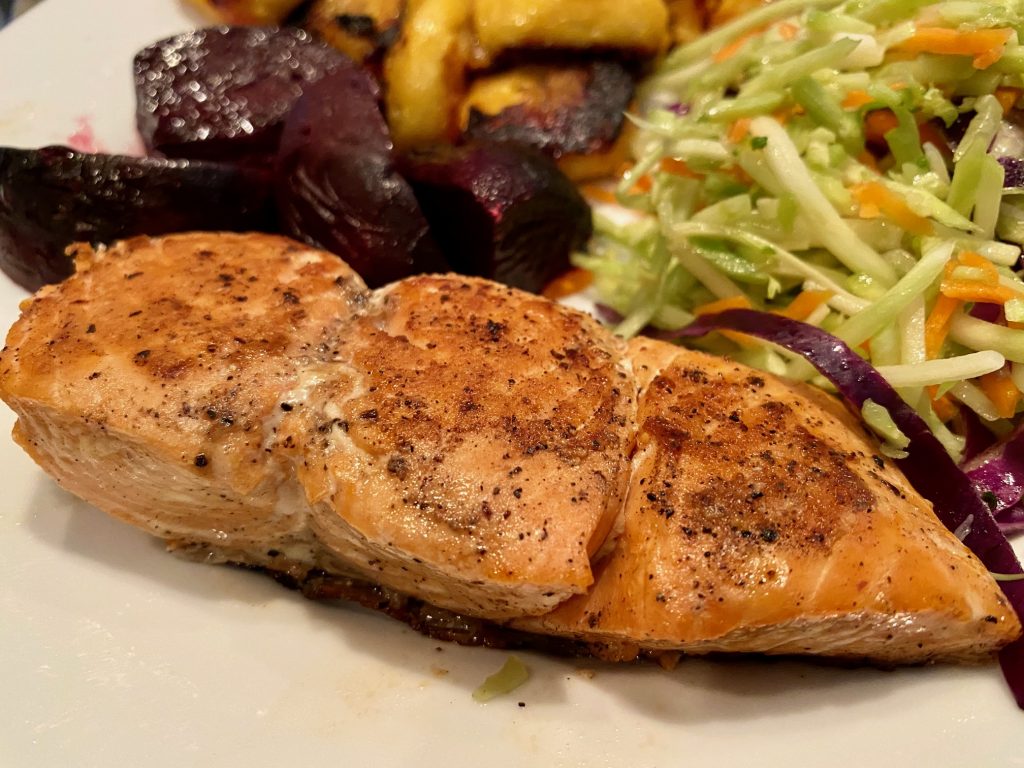
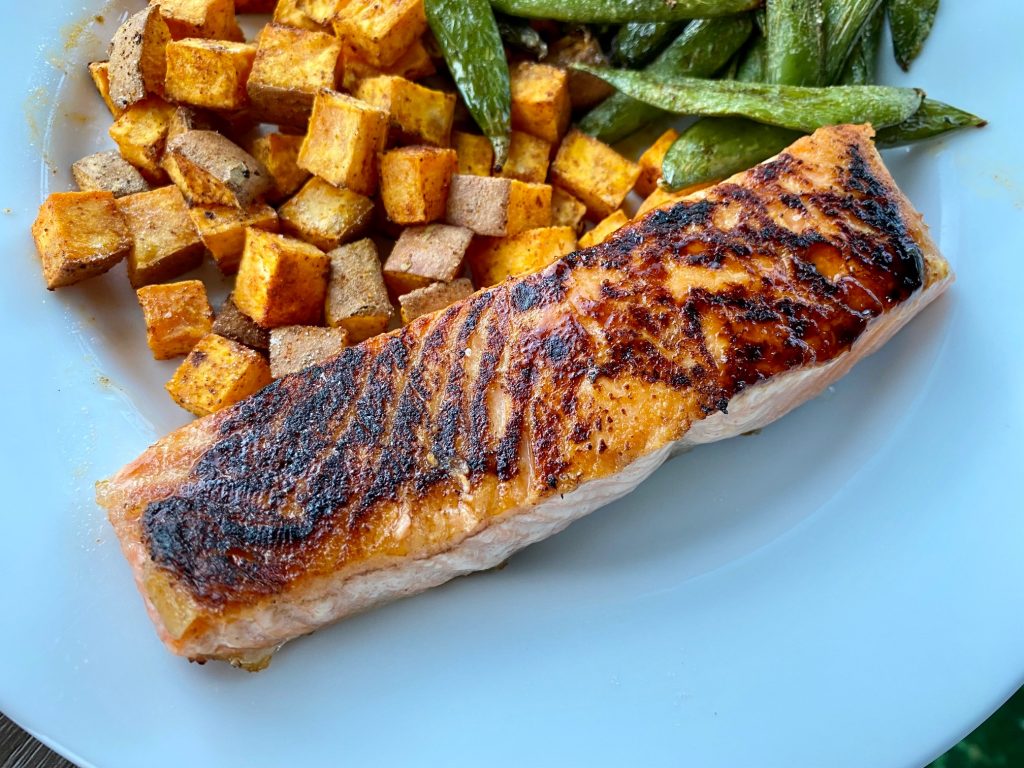
Look at that perfection!

Because it’s so easy, healthy, and delicious, this pan-seared salmon has gone into my rotation of staple recipes…I’ll make it as often as I can get my hands on the right type of salmon filets. In fact I’ve made some notes on that in the recipe below, in terms of what I’ve found to work best.
Other delicious salmon recipes you’ll love:
- How to Cook Frozen Salmon in the Air Fryer (my go-to weeknight dinner!)
- Salmon & Quinoa Power Bowl with Lemon Feta Avocado Salsa
- Maple Citrus Grilled Salmon
- Roasted Salmon with Shallots & Tomatoes
- Pan-Caramelized Salmon
- Have leftover salmon? This salmon & potato hash is a great way to use it up.
- Going more indulgent? Try this creamy smoked salmon pasta with veggies!
I used Zestful Kitchen’s post as a guide
Pin for later!
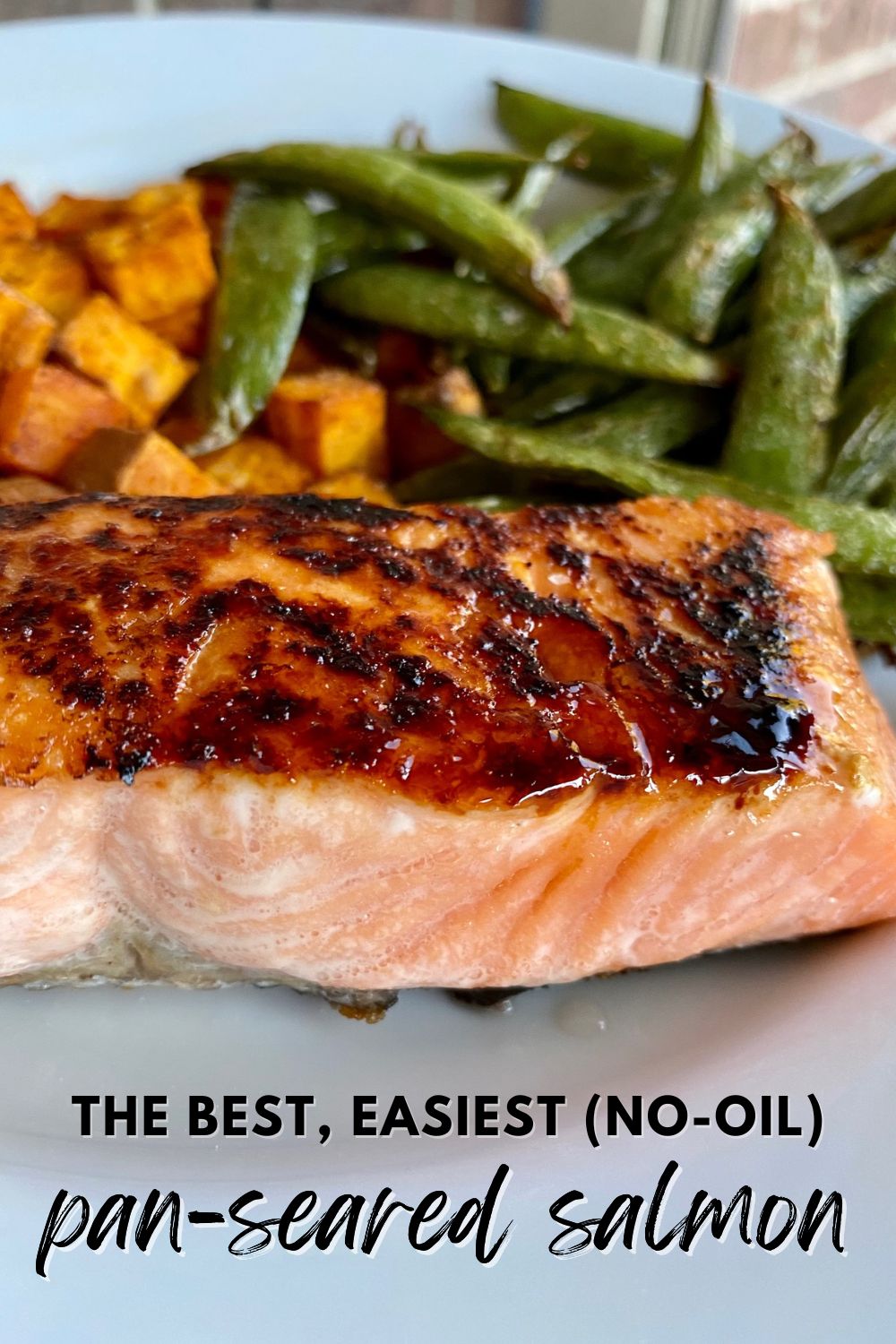
The Best Pan-Seared Stovetop Salmon...& How To Cook Salmon Without Oil
This pan-seared salmon is the best way to cook salmon without oil, & yields the most amazing texture--just like restaurants make! Don't be put off by the detailed instructions below, I just wanted to provide as much info as possible on texture, the steps I take, etc...it's actually super fast & easy!
Ingredients
- 1 wild-caught Atlantic salmon filet (see notes), ideally center-cut
- Coarsely-ground sea salt
- Fresh ground pepper
- Optional: 1/4 teaspoon of sugar, or garlic powder or paprika for extra seasoning
Instructions
- Start with a cold non-stick skillet (mine is stainless steel, so it occasionally does stick, but I don't like the chemicals on the teflon ones). Sprinkle some coarsely-ground sea salt in the skillet where the salmon filet will be.
- Pat your salmon dry with paper towels. Place in the pan skin side down (on top of the salt) and sprinkle the top with salt (more than you think!) and some fresh-ground pepper. You can also add a tiny bit of garlic salt, or paprika, or sometimes I put the tiniest bit of sugar to help it caramelize gorgeously.
- Turn on the burner to medium to medium-high and let it start cooking. As the salmon cooks, you'll see the fat beginning to render from the skin and the skin will start to brown, and you'll start to see a more opaque light pink color moving up from the bottom.
- When I have a fairly thick piece, I'll often put a lid over it toward the beginning of cooking, just for 1-2 minutes. This helps the middle part cook a bit more evenly, without burning the bottom. It's optional, but I think it helps.
- Cook it with the skin side down for 5-7 minutes, looking at the salmon to determine when it's time to flip (thickness of filet matters a lot). When you start to see quite a bit of opaque area, but there's still quite a bit of darker pink on top, that means it's time to flip!
- Go ahead and flip your salmon filet, being careful to scrape under the skin to keep it intact as much as possible. Make it a clean flip and don't move the filet around once you've flipped it over---you want it to cleanly sear the top.
- The majority of the actual cooking is going to get done when the skin side is down. Once we flip it, we'll only keep it here maybe 2 minutes, just to finish it off. You don't want to overcook it or burn the more delicate flesh that's on the top of the filet. See notes on internal temperature.
- Once it's ready to take off, very carefully scrape under the filet and remove it from the pan, flipping it back over and putting it on a plate. Serve immediately. I usually sprinkle a bit more salt on top as soon as it comes off the heat.
Notes
- I've tried this with a few different types of salmon, and have found I like the texture of a wild-caught Atlantic salmon filet the best (it's fattier as well). Coho tends to be drier, denser, and fishier. And when I can get them, a center-cut filet is perfection (vs. the ends). But really anything can work.
- I have NOT had good luck thawing frozen salmon filets and using those...there's just too much water and the texture isn't right. I realize that what you get fresh at the store is often previously-frozen, but for whatever reason the texture is totally different.
- The USDA recommends 145 F as the internal temp for salmon, which makes salmon sad and dry. When cooking by other methods, I shoot for 120-125 F, but for my pan-seared salmon I tend to go even lower and just go by by look and feel. I'd guess I usually end up pulling it off around 112 F. Don't forget that it keeps cooking a bit once you take it off the heat!
Recommended Products
As an Amazon Associate and member of other affiliate programs, I earn from qualifying purchases.




You’re right. This is, hands-down, the best salmon I have ever made!
It would be nice to have nutritional information, seeing I’m a beginner and need to know calories, fat content, ect., ect. But overall very nice. Thank you 😊. 😊.
Hi! I’m glad you enjoyed the recipe. I don’t track calories, etc. but you can definitely Google your recipes and ingredients to find the values you’re looking for!
This recipe is very easy and the salmon was moist and delicious. It was not dry at all. I used fresh Atlantic salmon. I recommend this recipe.
Just curious if you have tried preheating the pan before placing the salmon in it. I’ve found this makes it much less likely to stick, but I’ve always done this with oil. Heat the pan, add oil and let it heat, and then add the salmon.
Hi Esther! I’ve done it that way as well…that’s the opposite of how I was trying to cook it here, but certainly it works (if more splattery). I needed to not use oil for cooking due to a diet protocol I was on, plus salmon is so fatty that it doesn’t actually *need* oil…if the pan’s heat is right, it won’t stick.